Agentic AI is moving from an experimental interface to an operating-model question. The important shift is not that software can produce more text, code or analysis. It is that systems are beginning to carry work across several steps: gather context, choose tools, complete an action, check a result and hand the outcome back to a person.
For European companies, that changes the management problem. Leaders can no longer treat AI adoption as a collection of individual productivity hacks. They need to decide where autonomous action is useful, which boundaries must remain human, and how responsibility travels when a digital agent touches multiple systems.
## The unit of adoption is changing
Early enterprise AI adoption often focused on the employee: give a person a capable assistant and measure whether the task becomes faster. Agentic workflows change the unit of adoption from the individual task to the business process.
A customer-service agent may retrieve account history, check policy, draft a response and update a case. A finance workflow may reconcile receipts, flag anomalies and prepare a variance note. A software workflow may investigate an issue, propose a change and run tests. In each example, value comes from coordination across steps rather than the quality of a single answer.
That makes process design more important than prompt design. If ownership is unclear, if source data is inconsistent or if permissions are too broad, a more capable model can simply move the problem faster.
## Europe’s distinctive constraint can become an advantage
European companies operate under a demanding mix of privacy, sector regulation, labor expectations and multilingual markets. This can slow careless deployments, but it can also force better operating discipline.
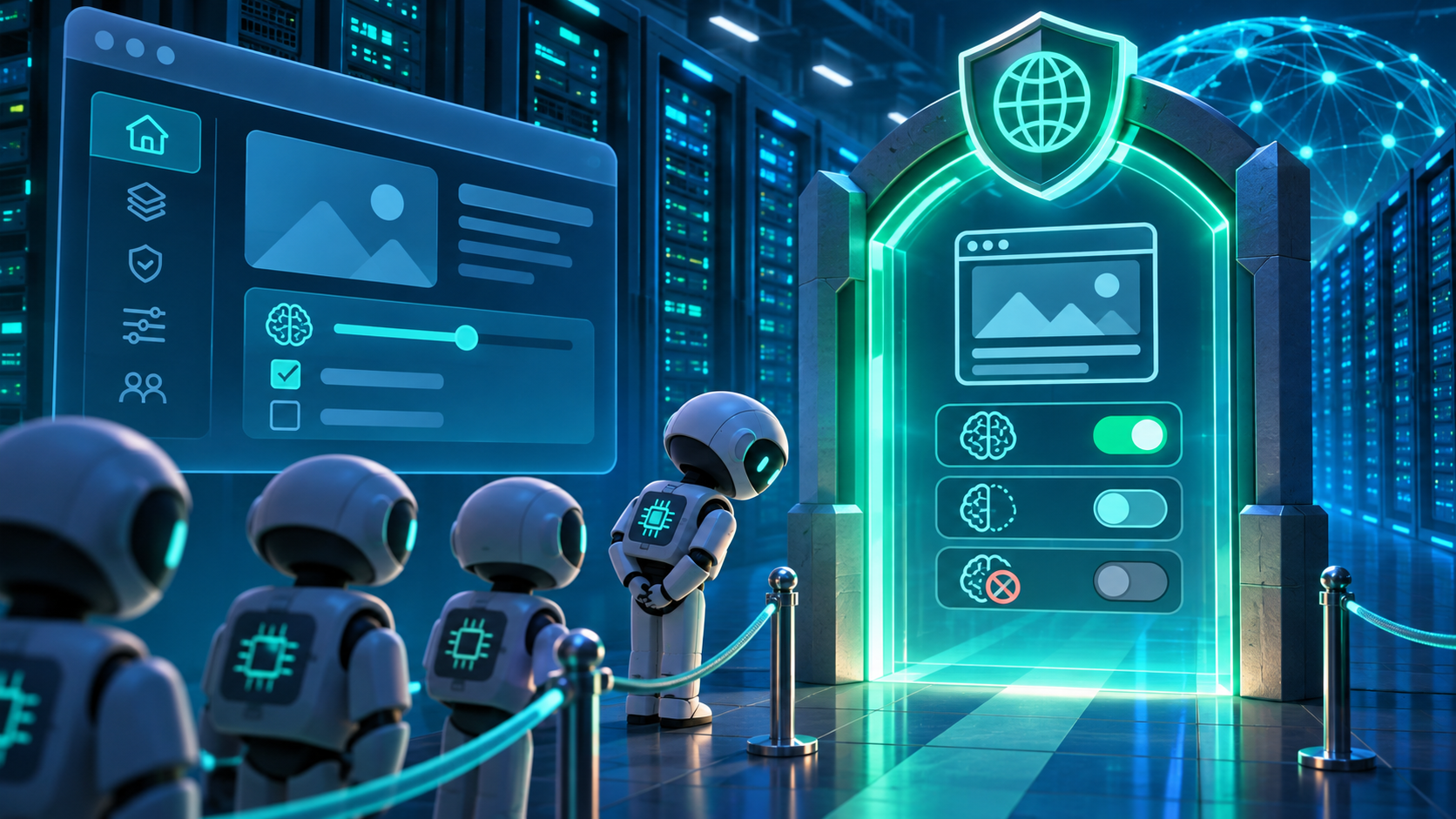
An agentic system needs an explicit purpose, defined data access, observable actions and a clear escalation route. These are not only compliance requirements. They are also the elements of a reliable workflow.
Companies that document decisions, separate permissions and maintain human review for high-impact actions create reusable infrastructure. Once that foundation exists, they can deploy additional agents with less uncertainty. The organization moves from isolated experiments to a governed portfolio of workflows.
## Small businesses face a different calculation
Large enterprises can dedicate teams to identity management, evaluation and risk controls. Smaller companies rarely can. Yet lean teams may have the strongest incentive to automate work that spans marketing, finance, commerce and customer operations.
The practical answer is not to imitate an enterprise program at miniature scale. It is to narrow the first deployment. A small business should choose one workflow with frequent repetition, visible cost and a reversible outcome. The goal is to learn how the system behaves in the company’s real data environment before granting broader authority.
A good pilot has five properties: one accountable owner, a defined input, an expected output, a measurabl
e baseline and a clear stop condition. Without those elements, automation becomes an open-ended technology trial.
## Identity is the hidden architecture
As agents begin to take actions, identity becomes as important as intelligence. Every workflow needs to answer four questions:
1. Which person or role authorized the action?
2. Which data and tools may the agent access?
3. What evidence is retained about the steps it took?
4. Who can interrupt, reverse or approve the outcome?
Using a shared, overprivileged account undermines all four. Companies need task-specific access, time-limited credentials where possible, and logs that connect an agent’s action to a business owner.
This architecture also affects procurement. Buyers should evaluate not only model quality, but permission controls, auditability, data retention, integration boundaries and incident response.
## The management layer matters most
Agentic systems expose weaknesses that organizations previously absorbed through informal human coordination. A person notices that a spreadsheet is out of date, knows which colleague to ask, or recognizes that a policy has an exception. Software needs those dependencies made explicit.
The highest-return work may therefore be unglamorous: cleaning data, naming process owners, standardizing approval rules and removing duplicate systems. Agentic AI rewards organizations that understand how work actually moves.
This also changes leadership metrics. Usage counts and generated tokens say little about operating impact. Better measures include cycle time, exception rates, rework, resolution quality, employee intervention and the economic value of completed outcomes.
## A practical deployment sequence
Companies can structure adoption in four stages.
First, map the workflow as it runs today, including unofficial handoffs and exception paths. Second, automate only the low-risk steps while keeping approval around consequential decisions. Third, compare agent-assisted outcomes with a human baseline. Fourth, expand authority only when evidence shows stable performance.
At every stage, the organization should preserve the ability to reconstruct what happened. An agent that works quickly but cannot explain which systems it changed creates operational debt.
## The competitive question
The next gap in AI performance will not be between companies that have access to strong models and those that do not. Access is becoming broadly available. The gap will be between organizations that can convert capability into governed execution and those that remain trapped in disconnected pilots.
Europe’s regulatory and organizational complexity makes the transition harder, but it also makes the lessons more durable. If companies build identity, accountability and process clarity into the first wave of agentic systems, they create an operating layer that can scale.
The strategic question is no longer whether an agent can complete a task. It is whether the company is designed to let that happen safely, repeatedly and with economic purpose.